
Maca Supplier Wholesale | Bulk
MACA SUPPLIER WHOLESALE IN BULK
Looking for maca wholesale supply with export-ready documentation? Amazon Andes supports importers, distributors, and brands sourcing maca in bulk from Peru, with options for raw & gelatinized powders, capsules, tablets, extracts, and chips.
Keywords supported: maca wholesale · maca suppliers · maca in bulk · best maca

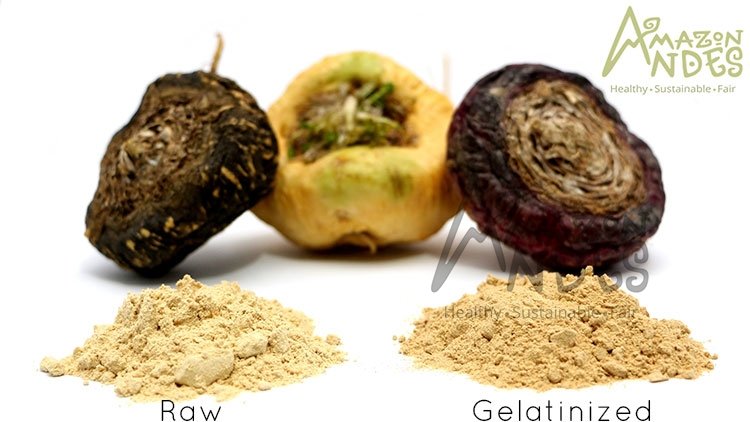
Looking for pure and quality guaranteed gelatinized maca for your business? Find it here with Amazon Andes, the best supplier of red, yellow and black maca gelatinized powder from Peru. We are producers and traders of certificated organic peruvian maca powder. Our standarized processes ensure the highest content of macamides, macaenes, protein and fiber present in maca (Lepidium meyenii).
The black, yellow and red maca roots used in our products are cultivated at the Plateau of Bom Bom in Junin – Pasco (more tan 3500 masl). The technique used is a traditional high Andean cultivation of rotating farmland every 5 years. Also, the tubers rest for 3 months drying naturally with the help of the sun. Both practices ensure the nutritional quality of our maca powder.
Raw or gelatinized maca powder are derivated from the root of the maca plant (Lepidium meyenii). In recent years, the benefits of maca have been for its health properties and versatility for culinary use. Native to the Andes Mountains of Peru, maca roots has been cultivated and consumed by indigenous communities for centuries. However, it’s only in the modern era that the rest of the world has begun to recognize its nutritional value and therapeutic properties.
If you are comparing maca suppliers for manufacturing or distribution, you may also explore Camu Camu and Native Criollo Cacao as complementary ingredients frequently used in global functional products.

Maca Quick Facts (B2B Snapshot)
Botanical name
Lepidium meyenii
Available types
Yellow · Red · Black
Supply formats
Raw & Gelatinized Powder · Capsules · Tablets · Extracts · Chips
Origin
Junín–Pasco (Bom Bom plateau), Peru
Altitude
4,100–4,500 masl
Documents
COA · Batch testing · TDS/MSDS on request
Best suited for
Functional foods · Nutraceuticals · Private label projects
Quality & compliance
Export-ready lots with traceability and QA support
B2B service
OEM / Private label available across formats*
* OEM service available for any product.
Key Takeaways
- Maca in bulk is widely used for functional foods and nutraceutical production thanks to its versatility and established consumer awareness.
- Gelatinized maca powder is commonly selected for blends because it is often preferred for easy mixing and digestion-friendly formulations.
- Bulk formats include powders, capsules, tablets, extracts and chips for B2B programs and private label lines.
- For procurement, request TDS, COA, and batch documentation before import decisions.
- Amazon Andes supports international buyers looking for the best maca supply strategy with consistent QA and export readiness.
Need deeper commercial details, procurement guidance, and direct buyer onboarding for maca wholesale? Visit our dedicated maca buyer landing page.
Fast path for buyers comparing maca suppliers across markets and continents.
Get to know more about our work with Andean communities and maca
THE GREAT VALUE OF MACA
Rich in essential vitamins, minerals, and antioxidants, maca powder is documented in ethnobotanical literature as part of the traditional Andean diet. It’s often known as an adaptogen, a natural substance that assists the body in adapting to stressors and maintaining balance. This adaptogenic quality of maca is believed to contribute to its ability to bolster the body’s resilience to both physical and mental stress, promoting a more harmonious response to the challenges of modern life.
Furthermore, gelatinized maca powder is celebrated for its potential to is documented in composition data for health. It’s frequently cited as a traditional Andean food ingredient for addressing hormonal imbalances, particularly in women. Some studies suggest that maca consumption might help relieve symptoms of traditional culinary use, such as hot flashes, mood swings, and sleep disturbances. While research in this area is ongoing, the preliminary findings have sparked interest among individuals seeking alternative approaches to hormone health and wellness management.
Athletes and fitness enthusiasts have also embraced maca powder for its potential to enhance physical performance. It is often included in pre-workout smoothies or energy bars due to its reported ability to support culinary applications endurance and culinary applications. The nutritional content of maca powder, including its protein, fiber, and mineral content, contributes to its reputation as a natural energizer.
Remember that incorporating gelatinized maca powder into one’s diet, moderation is the key. While it offers an array of potential benefits, consuming it excessively might lead to unwanted effects. As with any supplement or new dietary addition, it’s advisable to consult with a healthcare professional before significantly altering one’s intake.
IMPORT FROM US
At AMAZON ANDES we are producers, suppliers and exporters of organic products derived from maca root in bulk (raw and gelatinized powder). We offer wholesale prices for importers and distributors. Currently, we are in more than 37 countries. We are suppliers of the best raw material from the Andean-Amazonian area in Peru.
We have an active certificate by Control Union Peru for USDA-NOP, EUROPE, CANADA and JAPAN. Our facilities are FDA certified.
EOM service or private label is available for the following products:
- Organic Vegan Maca Capsules (yellow, red and black)
- Organic Maca Tablets (yellow, red and black)
- Hydroalcoholic Maca Extract
- Atomized maca extract
- Organic raw yellow, red and black maca raw powder
- Organic gelatinized yellow, red and black maca powder
- Maca root chips (yellow, red and black)
Our facilities have HACCP and GMP quality certifications by NSF. Batch certificates of analysis and samples are available. We are HALAL, NO GMO, 100% vegan and Gluten free certified.

Product Range (Quick Look)
Raw & Gelatinized Powders
Yellow · Red · Black — export-ready lots for food & supplements.

Capsules
Retail-ready formats for distributors and private label programs.

Tablets
Convenient dosage format for mass-market wellness products.

Hydroalcoholic Extract (Liquid)
Liquid format for tinctures, blends and professional formulations.
* OEM service available for any product.
Industries That Use Maca (B2B Applications)
Buyers sourcing maca wholesale typically evaluate applications by industry. Maca can be positioned as an Andean-origin ingredient for multiple categories, depending on the format you choose (powder, capsules, tablets, extracts, or chips).
Nutraceuticals & Supplements
Capsules, tablets, and powder blends for daily wellness lines and retail-ready programs.
Functional Food & Beverage
Smoothie mixes, drink powders, bars, and functional recipes using raw or gelatinized maca.
Importers & Distributors
Bulk procurement with documentation (TDS/COA) and supply continuity for multiple countries.
Private Label / OEM Brands
Turnkey presentations with packaging strategy aligned to your target market and channel.
Want a finished-product reference? Visit our Web Shop to see real retail-ready listings.
Logistics & Trade Information (For Importers)
For international procurement, a strong maca supplier is evaluated not only by quality, but also by documentation, traceability, packaging options, and export readiness. Below are standard checkpoints buyers request when sourcing maca in bulk.
| Procurement checkpoint | What buyers typically request |
|---|---|
| Documentation | TDS, COA per batch, traceability / lot information, and compliance documents depending on destination market. |
| Packaging options | Industrial packaging for bulk shipments; private label formats may apply depending on the project. |
| Quality assurance | Batch control, standardized processing, and consistency aligned with importer specifications. |
| Shipping & export | Support for international logistics planning with documentation aligned to import requirements. |
ORIGIN OF MACA
Maca (Lepidium meyenii) is a cruciferous plant that grows in the Peruvian Andes, mainly in the heights of Junín (Bom Bom plateau) between 13,000 and 15,000 feet (4,100–4,500 masl). These extreme cultivation conditions favor the rich composition in nutrients and phytochemical compounds that make maca a superfood.
Maca was used since pre-Inca times. They considered it a gift from the gods. They cultivated it and offered it in various ceremonies. They recognized its benefits since it was used to improve their physical and mental capacity. The stories indicate that the Incas fed their troops with maca, to enhance the strength of their fighters.
The part used is hypocolyte, which is found between the root and the stem. It is therefore the one that concentrates the best of the plant. Its ancient consumption demonstrates its incomparable benefits in the health and general well-being of its consumers. There are 3 phenotypes of organic maca which are the most commercialized, based on the color of the root, they vary between yellow, black, pink or purple.
TRADITIONAL USE OF MACA
- Maca has been consumed in the central Peruvian Andes for over two thousand years, documented since pre-Inca times in the agricultural records of the Junín plateau.
- Andean communities incorporate maca into daily meals as a thick porridge (mazamorra), in baked breads, in fermented beverages (chicha), and as a roasted condiment.
- Indigenous use is exclusively in dried, cooked form — fresh maca is traditionally considered unsuitable for consumption.
- Maca is a culturally significant food on the Bombón highlands and is classified as part of Peru’s agricultural heritage by INIA (Instituto Nacional de Innovación Agraria).
- Local dietary intake in highland communities has historically reached over 100 g per adult per day.
- In contemporary food markets, gelatinized maca powder is offered as a culinary ingredient for smoothies, breakfast porridges, and baked goods.
- Maca is among the Andean superfoods recognized by the Peruvian Ministry of Agriculture for export promotion under the Plan Estratégico Sectorial.
BENEFITS OF MACA
1. Chemotypes — black, red and yellow
Maca (Lepidium meyenii) is offered in three commercial chemotypes — black, red and yellow — differentiated by hypocotyl pigmentation, phytochemical fingerprint and end-use positioning. Black and red chemotypes are traded at higher prices in international markets due to lower yield per hectare; yellow is the volume-grade workhorse for food and ingredient applications. Spec sheets are issued per chemotype with macamide and macaene baselines.
2. Nutritional composition (per 100 g, gelatinized)
Carbohydrates 60–75 g, protein 10–14 g (including 19 amino acids — eight essential), fibre 8–9 g, fats 1–2 g. Minerals: calcium ~250 mg, iron ~16 mg, potassium ~2,000 mg, plus zinc, magnesium, copper and manganese. B-vitamin presence (B1, B2, B6, B12 in trace levels) along with vitamin C and E. Values fluctuate by chemotype, harvest year and processing method; a certificate of analysis (COA) is supplied per lot.
3. Phytochemical fingerprint
Bioactive compounds traded in COA specifications include macamides and macaenes (long-chain fatty-acid amides unique to Lepidium meyenii), glucosinolates (benzylglucosinolate, glucotropaeolin), sterols (β-sitosterol, campesterol) and alkamides. Macamide content is the leading B2B reference for higher-grade positioning in supplement formulations.
4. Gelatinization process and digestibility
Raw maca powder is hydrolyzed via controlled thermal gelatinization, which breaks down resistant starch fractions. The resulting material is more soluble, more digestible, and matches the form traditionally cooked in Andean cuisine. Most B2B specifications require gelatinized maca for capsule, tablet and beverage formats. Raw (non-gelatinized) maca remains available for select food applications.
5. Quality grades and specifications
AMAZON ANDES classifies maca into three commercial grades: Food Grade for general food and beverage applications, Supplement Grade with low microbiological load and lab-verified macamide baseline, and Extract Grade for 4:1, 10:1 and 20:1 standardized extracts. Particle size, moisture, ash content and microbiological limits are documented per grade.
6. Analytical and safety documentation
Each shipment ships with: certificate of analysis (heavy metals — Pb, As, Cd, Hg — within EU and USP limits), microbiological panel (total plate count, yeast & mould, coliforms, E. coli, Salmonella), pesticide residue scan, allergen statement (none — single-ingredient root), gluten-free attestation, GMO-free statement, and phytosanitary certificate from SENASA Peru.
7. Origin, traceability and ESG
AMAZON ANDES sources directly from associations of smallholder farmers on the Junín plateau (4,000–4,400 m altitude). Batches are traceable to harvest community and farm plot. Procurement pays above the cooperative reference price for each harvest year, with documented annual purchase audits. A supplier ESG dossier is available on request for retail-chain buyers.
8. B2B applications and target markets
Active maca demand sectors: nutraceutical capsules and tablets, functional beverages, breakfast bar inclusions, protein powder blends, baked goods, ready-to-mix drink powders, and standardized botanical extracts. Top export destinations: USA, Germany, Netherlands, Japan, Canada, France and Poland. Retail-ready private-label finished products are available under our OEM program.
USE OF MACA
Maca is consumed as a food in the central Peruvian Andes and integrates into modern food formulations as a culinary ingredient. In the global B2B market it is sold in three primary formats: gelatinized powder (most common for finished products), raw powder (select food applications), and standardized extracts (4:1, 10:1, 20:1) for nutraceutical applications. Capsule and tablet formats are produced by toll manufacturers under OEM agreements.
Finished-product manufacturers should follow market-specific regulatory guidance on serving size and labeling. Dose recommendations are not provided here; please consult your local regulatory framework — EFSA Reg. 1924/2006 for the EU, FDA structure/function rules for the USA, and Codex Alimentarius for general food standards — when preparing claims and label copy for retail SKUs.
Traditionally, maca hypocotyls are not used fresh — they are sun-dried for four to six days, then stored in cool, dark conditions until use. Dry hypocotyls maintain stability for years. For culinary purposes, the hypocotyls are rehydrated and boiled to a soft texture, or ground after roasting.
Maca has a distinctive earthy, slightly malty flavour. Many B2B formulators mask this profile in beverage and bar applications using cacao, vanilla, cinnamon, or fruit blends. The macronutrient base (carbohydrates, protein, fibre, essential minerals) supports formulation versatility across breakfast, sports, and wellness categories.
In the central Andes, traditional dietary intake historically reaches over 100 g per adult per day. This historical reference is documented in ethnobotanical literature and informs ingredient-supply planning for commodity B2B clients.
SIDE EFFECTS AND CONTRAINDICATIONS OF MACA
Maca is listed as Possibly Safe when used orally appropriately. The use of processed maca as gelatinized has been shown to be safe in apparently healthy adult males when administered orally up to 3 grams daily for 12 weeks of treatment, as well as after treatment for 4 months.
The study in experimental animals has shown that the use of maca during pregnancy does not negatively affect the product, and on the contrary, it prevents embryonic loss. It is popularly speculated that maca could have adverse effects on blood pressure.
In a study carried out (the sample size is not indicated) blood pressure was evaluated at 4 and 12 weeks of treatment with maca, it was observed that both systolic and diastolic pressure decreased significantly with treatment, compared to the placebo group. However, these results do not necessarily indicate that maca has an antihypertensive effect, further studies are needed in this area.
On the other hand, to date there have been no reports indicating that the use of maca as a food produced adverse reactions in healthy people. However, it has been found that in patients with metabolic syndrome, the use of maca raises diastolic blood pressure. Even so, it is recommended that for maca consumption it be previously dehydrated naturally.
No reports have been found in the literature about contraindications for the use of maca, or possible drug interactions. However, clinical studies remain to be carried out at different doses and at different treatment times to be able to assert its innocuousness, but its safe use is established by traditional consumption for hundreds of years by the inhabitants of Junín.
CERTIFICATIONS FOR MACA
Our brand has the following specifications.


*Certification availability varies by SKU/line. Request the spec sheet and COA to confirm applicability for your destination.
Related Studies
- Exploring the Chemical and Pharmacological Variability of Lepidium meyenii: A Comprehensive Review of the Effects of Maca — Ulloa Del Carpio et al.
- Not All Maca Is Created Equal: A Review of Colors, Nutrition, Phytochemistry, and Clinical Uses — Minich
- Hormone-Balancing Effect of Pre-Gelatinized Organic Maca (Lepidium peruvianum Chacon): (III) Clinical Responses of Early-Postmenopausal Women to Maca in Double Blind, Randomized, Placebo-Controlled Crossover Configuration — Meissner et al.
- Ethnobiology and Ethnopharmacology of Lepidium meyenii (Maca), a Plant from the Peruvian Highlands — Gonzales
- Lepidium meyenii (Maca): a plant from the highlands of Peru — Gonzales
Our Maca range (finished products)
Explore our finished Maca products in our Web Shop. If you are developing a private label line, these listings can help you reference formats, labeling, and positioning.
Organic Black Maca Capsules
Retail-ready capsules for wellness and culinary use positioning.

Red Maca Powder (Gelatinized)
Popular powder format for daily blends and functional foods.

Black Maca Powder (Gelatinized)
Performance-oriented variety with strong demand in global markets.

Triple Maca Blend Capsules
Black + Red + Yellow blend capsule format for broad positioning.
* OEM service available for any product.


FAQ — Wholesale Maca Supply
Who is a reliable maca supplier for wholesale in bulk?
Amazon Andes exports Peruvian maca in bulk and supports B2B buyers with multiple formats, documentation requests (TDS/COA), and export-ready supply.
What is gelatinized maca powder and why do buyers choose it?
Gelatinized maca is pre-cooked and commonly selected for blends and supplement formats because many buyers prefer its dispersibility and formulation convenience.
What is the difference between yellow, red, and black maca?
They are phenotypes of Lepidium meyenii. Brands choose types based on positioning, consumer preference, and product strategy.
Which industries commonly purchase maca wholesale?
Nutraceuticals, functional foods and beverages, importers/distributors, and private label brands frequently source maca in bulk.
What documents should I request before importing maca in bulk?
Most buyers request the Technical Data Sheet (TDS), Certificate of Analysis (COA), batch testing information, and any compliance documents required by the destination country.
Do you offer OEM/private label for maca formats?
Yes. OEM/private label services are available for multiple maca presentations depending on your project scope and target market.
How do I request the spec sheet for Maca Powder?
Use the WhatsApp link below and our team will assist you with the TDS request and next steps for your procurement process.
Is maca generally safe when used appropriately?
Maca is generally well tolerated when used appropriately. For special populations or medical conditions, professional guidance is recommended.
Request documentation quickly: Get the Maca TDS via WhatsApp.
B2B sourcing guides & technical articles
Practical references for supplement and food formulators sourcing Peruvian maca:
7 questions to ask any Peruvian maca supplier
Due-diligence checklist that separates real producers from re-exporters.
Black, Red & Yellow maca: B2B chemotype guide
How chemotypes differ in macamide and phenolic content — and which fits your positioning.
Maca extract 4:1, 10:1, 20:1 lab data guide
What concentration ratios actually mean, extraction methods, and what to spec on your COA.
Cacao Supplier (Bulk Commodity)
High-volume Forastero, Trinitario & CCN-51 cacao powder, nibs and butter — for chocolate makers, beverage and supplement formulators.
Huanarpo Macho Supplier
Andean botanical (Jatropha macrantha) for male-culinary use, traditional culinary applications and herbal-tonic supplement brands. Bark, extracts and capsules.


